What If Your Weird Background Is Actually Your Superpower?
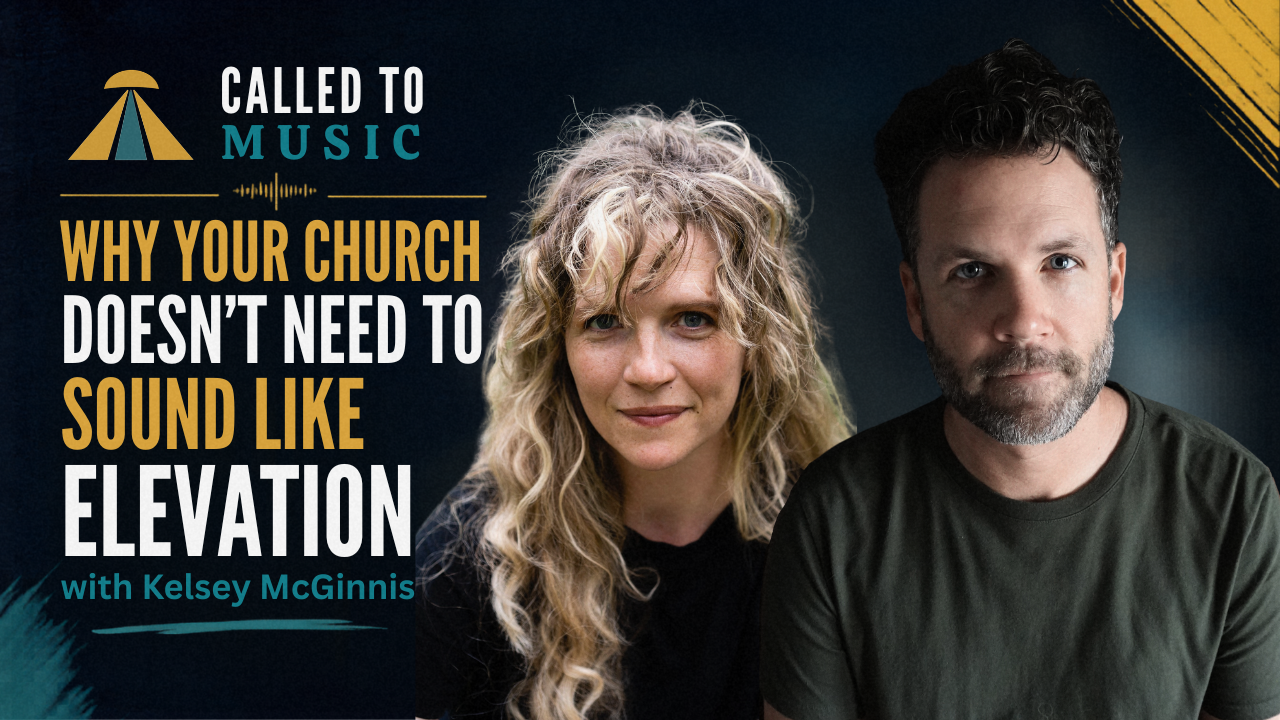
Sep 07, 2026I met Kelsey at the Churchfront Conference in 2024 and honestly knew right away she needed to be on this show. She is not a worship leader. She is not a recording artist. She is a musicologist, a PhD, a college professor, and a writer for Christianity Today who covers worship culture from the outside looking in.
And that outside perspa
When I felt called to relaunch this podcast, Kelsey McGinnis was one of the first people who came to mind. I had met her at the Churchfront Conference in 2024 and knew her perspective on worship culture was unlike anything I had heard before. She is not a worship leader or a recording artist. She is a musicologist, a PhD, a college professor, and a writer for Christianity Today who covers worship culture from the outside looking in.
And that outside perspective turned out to be one of the most refreshing things I have heard in a long time.
Your background is not baggage. It is a gift.
Kelsey talked about how her training as a musicologist gave her a completely different lens for looking at what happens in worship. And it got me thinking about my own journey.
Bringing tracks into the church, investing in pro level audio equipment, recruiting talented people regardless of where they learned their craft. None of that came from a theology degree. It came from paying attention to what excellence looks like in the world and asking how we can steward that in God’s house.
Here is what I believe. It does not matter where you learned your gifts because they are all gifts from God. When we use those gifts to serve in the church, whether through songwriting, worship leading, production, or anything else, we are skillfully playing unto the Lord. That is exactly what we are called to do. The source of the skill does not disqualify the offering.
Social media is a gift and a trap at the same time.
Kelsey made a comment during our conversation that stopped me cold. She said social media has cooked our ability to calibrate what is actually good. I called it out in real time because I felt it so deeply.
Here is the tension I live in. Social media is one of the greatest tools we have ever been given for sharing what God has put in us. Without it none of us would be able to reach who we reach. But it is also one of the biggest reasons the comparison and imposter game is so strong right now.
Everyone is constantly measuring their work, their voice, their value against what they see on a screen. And the result is that people who have something real to give never share it because they do not think they are at the level of what they see online.
That breaks my heart. Because the level they are comparing themselves to is often someone who has been doing this professionally for thirty years in Nashville. That is not a fair fight and it was never meant to be one.
Personally I do not necessarily struggle with comparison the way others do. But my process is to let great music inspire me rather than stifle me. Find the music that moves you and let it fuel your creativity. Do not let it become the measuring stick that keeps you from creating.
Let go of Nashville’s approval.
The close of our conversation was about just doing something for your church and not trying to sound like someone else. That one hit close to home.
One of the best things I have done in the past year or so is release the idea that Nashville’s approval determines the value of my music. I have had songs pitched there and received well. But once I let go of the idea that their yes means good and their no means bad, everything shifted.
Now I ask a different question. Is this song good for my church? Is it right for my sphere of influence? If the answer is yes then it is worthy of sharing. Full stop.
That is not settling. That is obedience to the right audience.
Ministry has seasons and so does your lane.
One of the things Kelsey touched on that I have not been able to stop thinking about is the idea of seasons in ministry. And I think it connects directly to what Called to Music is all about.
Our calling is one road with many lanes. But I also think the lanes shift depending on the season we are in. There are seasons where we are observing and learning. Seasons where we are shadowing and supporting. Seasons where we are leading. And then seasons where we are coaching, mentoring, and eventually just cheerleading for the next generation.
All of those are valid. All of those are part of the road.
The problem is when we fight the lane change. When we try to stay in a leading season past the time God is asking us to move into a coaching season, or when we resist a learning season because it feels like a step backward. That is where frustration and burnout live.
The most faithful thing we can do is stay open handed about which lane we are in right now and trust that God knows the road better than we do.
Listen to the full conversation
Kelsey brings a perspective to worship culture that I have genuinely never heard anywhere else. If you have not listened yet go check it out.
Watch on YouTube: [link]
Join the Called to Music community on Facebook: https://www.facebook.com/groups/calledtomusic
Find out what lane you are in: bryanbolivermusic.com/lanequiz
ective? It turns out to be exactly what the church needs.
She never had a plan
Kelsey grew up surrounded by musicians. Her mom is a classically trained pianist and vocalist. Her dad plays bass and guitar. Her grandmother was a church organist. Music was just the air she breathed growing up.
But she never had a clear path. She started college as a clarinet performance major, switched to English, kept music as a minor, led worship for her campus ministry, and eventually got a master's and then a PhD in musicology. Not because she had a grand strategy. Because she loved it and kept following what she loved.
The pivot to writing came almost by accident. She pitched her first article to Christianity Today during COVID, commenting on what it actually means to try to worship together through a screen. One editor liked it. Then another. And now she writes regularly about worship culture from a perspective almost nobody else in the church world has.
No plan. Just faithfulness to the next thing.
The secular skill that unlocked everything
One of the things Kelsey said that stuck with me was this idea that when you bring a framework or perspective from outside the church into the church world, it lands differently. Because nobody has seen it that way before.
Musicology is not a theological discipline. It is the study of music in culture and history. And because of that, Kelsey gets to ask questions about worship that theologians are not trained to ask and that worship leaders are too close to see clearly.
That is not a liability. That is a lane.
Whatever world you came from before music or before ministry, do not dismiss it. It might be the exact thing that makes your contribution irreplaceable.
Stop letting social media calibrate your standard
This was the moment in the conversation that I knew was going to hit people. Kelsey said it plainly: social media has cooked our ability to calibrate what is actually good.
When you spend all your time consuming content from worship leaders and producers who have been doing this professionally for thirty years in Nashville, in rooms full of people who have been doing it professionally for thirty years before that, you start to measure your own work against an impossible standard.
And that comparison will crush you.
Her advice was simple. Get off social media for a while before you create. Stop listening to the biggest worship names when you are trying to find your own voice. Because the algorithm has its own incentives and those incentives have nothing to do with what your church actually needs.
Just do something for your church
The close of our conversation was one of my favorites. We talked about the pressure worship leaders feel to sound like everyone else, to chase the big production, to make their church sound like a Bethel or Elevation recording.
And the answer is just to stop.
Do something for your church. Let it sound like you. Let it come from your community, your story, your people. That is not settling. That is obedience. And in my experience, when you stop trying to sound like someone else and just do what God is asking you to do right here, that is when things start to move.
Kelsey said it and I will say it again. What is good and useful and beautiful does not need to translate to what Instagram wants it to look like.
Watch the full episode on YouTube:
https://youtu.be/jMntZA7-57A?si=TadVh-_6pxFFdZru
If you have not heard this conversation yet go check it out. Kelsey brings a perspective I have never heard on a podcast like this and I think it is going to open something up for a lot of you.
Join the Called to Music community on Facebook: https://www.facebook.com/groups/calledtomusic
What's Your Lane?
Take the free quiz and find out how you're actually wired as a creative, songwriter, producer, or something else entirely.
We hate SPAM. We will never send you anything that w would not want to be sent!